HORMONES
Estrogen Dominance: The Root Causes No One Is Telling You About
Heavy periods, PMS, bloating, 3 a.m. wake-ups, and weight that won't budge. Estrogen dominance is rarely random. Here are the root causes most women are never told about, and where to begin gently.
There is a phrase I hear almost every week in my practice: "I think my hormones are off."
She is usually in her thirties or forties. Her periods have turned heavy or unpredictable. Her breasts ache the week before her cycle. She is bloated for reasons she cannot explain, gaining weight around her hips and thighs despite eating the same way she always has, lying awake at 3 a.m. with a racing mind, snapping at people she loves, and quietly wondering if she is losing herself.
She has often been told, kindly but unhelpfully, that this is "just hormones." Sometimes she's handed a birth control prescription. Sometimes she's told to come back when things get worse.
What's actually happening, in many of these women, is a pattern called estrogen dominance. It is not the mystery it gets made out to be. It has roots. And those roots, by God's design, can be tended to.
What estrogen dominance actually is
Estrogen dominance does not necessarily mean your estrogen is sky-high on a lab.
It means estrogen is out of balance with progesterone, which is its calming, steadying counterpart. Estrogen can be normal, low, or high; what matters is the ratio. When progesterone is too low to keep estrogen in check, estrogen's effects amplify and your whole body feels it.
Estrogen is meant to be a beautiful, building hormone. It thickens the uterine lining, grows breast tissue, supports mood, and keeps skin supple. Progesterone is meant to soothe and stabilize. It relaxes the nervous system, supports sleep, holds a pregnancy, and tells estrogen when to step back.
When that conversation breaks down, the body starts to shout.
The symptoms women rarely connect to estrogen
Most women know the obvious ones, such as heavy periods, PMS, and fibroids. But estrogen dominance reaches farther than that. Common signs include:
- Heavy, painful, or clotty periods
- PMS that feels disproportionate — rage, weepiness, anxiety the week before your cycle
- Breast tenderness, swelling, or fibrocystic breasts
- Bloating that's worse in the second half of your cycle
- Weight gain in the hips, thighs, and lower belly that does not budge with diet
- Mood swings, irritability, anxiety, low-grade depression
- Insomnia, especially the 2–4 a.m. wake-up
- Headaches or migraines around your period
- Fibroids, endometriosis, ovarian cysts, fibrocystic breasts
- Low libido
- Brain fog, poor memory, feeling foggy and reactive
- Cold hands and feet (estrogen dominance often comes with sluggish thyroid)
- Hair loss or thinning
- A short luteal phase (less than 10 days between ovulation and your period)
If you saw yourself in three or more of those, please keep reading. There is a reason for this, and there is a way through.
Why this is happening to so many women
I want to be honest with you. Estrogen dominance is not random, and it is not your fault. We are living in an environment our great-grandmothers never had to navigate. The good news is that almost every driver of estrogen dominance is addressable once you can see it.
Here are the root causes I see again and again.
1. Xenoestrogens — estrogens from the outside
Our world is saturated with chemicals that mimic estrogen in the body. They lock onto estrogen receptors and send false signals, and the body cannot tell the difference. They come from:
- Plastics (BPA, phthalates) in water bottles, food storage, receipts
- Conventional personal care products — fragrance, parabens, "fragrance oil"
- Pesticide residue on non-organic produce
- Conventional meat and dairy raised with hormones
- Tap water (chlorine, fluoride, trace pharmaceuticals)
- Scented candles, plug-ins, dryer sheets, conventional cleaning products
You don't need to live in fear of every label. But you do need to know that your daily exposure adds up, and your liver is the one carrying the bill.
2. A liver that's overwhelmed
Your liver is the primary place estrogen is broken down and prepared for elimination. When it's bogged down by alcohol, processed food, medications, mold exposure, or years of chemical load, it cannot keep up with estrogen detoxification.
Estrogen that should be leaving the body gets reabsorbed and recirculated. This is one of the most under-recognized root causes of hormone problems. The clearance is the problem, not the hormones themselves.
3. A sluggish gut
Here is something most women are never told: your gut detoxifies estrogen.
There's a community of bacteria in your gut called the estrobolome. When it's healthy, it helps escort used estrogen out of the body through your stool. When it's dysbiotic, including too much candida, SIBO, constipation, or antibiotic damage, estrogen gets unbound in the gut and reabsorbed back into circulation.
If you are not having a complete bowel movement every single day, estrogen has nowhere to go. This is also why so many women with leaky gut, SIBO, or chronic constipation end up with hormone symptoms. The two are inseparable.
4. Chronic stress (the silent driver)
Progesterone and cortisol are made from the same parent hormone, which is pregnenolone. When you are under chronic stress, the body diverts resources toward making cortisol to keep you safe. Progesterone production drops.
Estrogen stays where it is, and progesterone falls. The ratio shifts. And suddenly the woman who used to handle anything finds herself crying over the dishwasher.
This is not weakness. This is biochemistry responding exactly as it was designed to, even to a life that has asked too much for too long.
5. Blood sugar swings and insulin resistance
High insulin tells the ovaries to make more androgens and disrupts the delicate hormonal rhythm. It also lowers a protein called SHBG that normally keeps estrogen bound and quiet. When blood sugar is on a rollercoaster, such as skipped meals, sweet coffee, or late-night snacking, estrogen becomes more free and more active.
6. Nutrient depletion
The body needs specific nutrients to make and clear hormones well. These include magnesium, B vitamins (especially B6 and folate), zinc, vitamin C, choline, and sulfur-containing foods. Modern soil, modern food, and modern stress have left most women running low on every one of them.
7. Hormonal birth control and the lingering aftermath
I say this gently, because so many women are told the pill is "regulating their hormones." It replaces them with synthetics and switches off your body's own production. For some women, the effects on the gut, liver, mood, and natural hormone rhythm linger for years after stopping.
This is information you were never given, not a source of shame.
The faith piece: your body is not betraying you
I want to pause here, because I know what often happens when women read a list like this. The shoulders climb. The chest tightens. The voice in the head says, "Of course something else is wrong with me."
Friend, hear me. Your body is not betraying you. Your body is telling you the truth. Symptoms are not the enemy; they are the messenger.
"I praise you, for I am fearfully and wonderfully made. Wonderful are your works; my soul knows it very well." — Psalm 139:14
The body that God knit together for you is intelligent. It is constantly working to keep you alive, to protect you, and to communicate with you. Estrogen dominance is your body raising its hand and asking for help, not failing you.
Healing starts the moment we stop fighting the body and start listening to it.
Where to begin (gently)
You don't need to overhaul your entire life this week. In fact, please don't. The women who heal sustainably are the ones who move slowly and deeply, not the ones who burn out in a frenzy of supplements.
Here is where I'd start, in order of impact:
- Make daily, complete bowel movements non-negotiable. Water, magnesium glycinate at night, 30+ grams of fiber, movement after meals. If you're not pooping, you're not clearing estrogen. Period.
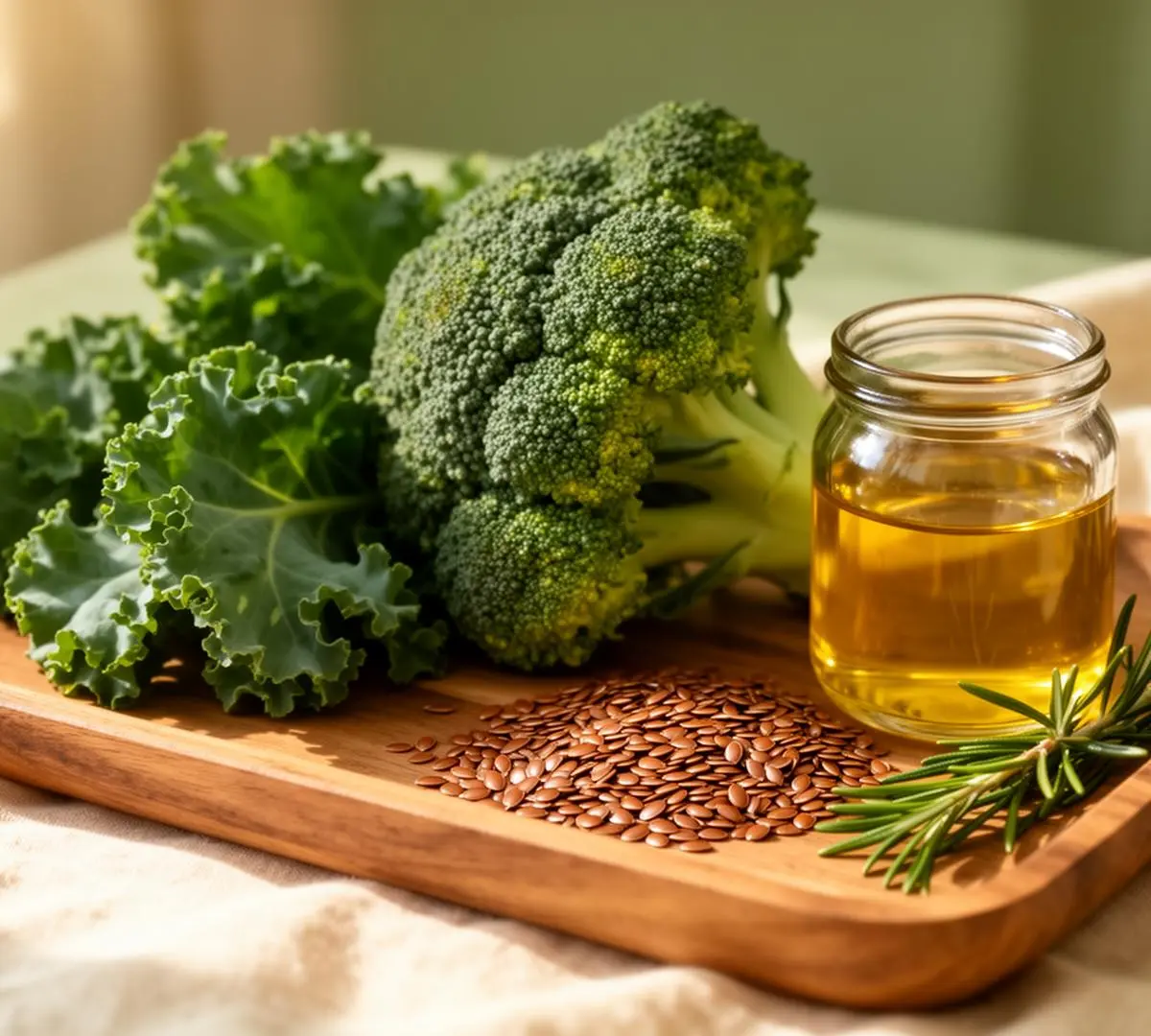
- Eat one cup of cruciferous vegetables a day. Broccoli, broccoli sprouts, cauliflower, kale, Brussels sprouts, cabbage. They contain compounds (DIM, sulforaphane) that help the liver metabolize estrogen down the healthy pathway.
- Add two tablespoons of ground flax seed a day. Flax lignans bind excess estrogen in the gut and help carry it out. Simple, ancient, effective.
- Stabilize blood sugar. Protein with every meal (30g at breakfast is a game-changer). Stop drinking your sugar. Don't skip meals. Don't snack late.
- Lower your daily xenoestrogen load. Swap your three most-used personal care products for clean versions. Switch plastic food storage to glass. Filter your drinking water. You don't have to do everything. Start with the things that touch your body and the things you put in your mouth.
- Support your liver. Bitter greens, lemon water in the morning, less alcohol, less processed food. Castor oil packs over the liver several nights a week are one of the gentlest and most underused tools we have.
- Tend your nervous system as if your hormones depended on it. Because they do. Ten quiet minutes in the morning with the Lord before your phone. A walk outside without earbuds. A bedtime that honors your body. Saying no to one thing this week.
You will not fix this in two weeks. You did not get here in two weeks. But you can absolutely turn the ship, and many women begin to feel meaningful relief within a cycle or two of consistent root-cause work.
When to get deeper support
If you have endometriosis, fibroids, severe PMS, infertility, or symptoms that have been with you for years, please don't try to navigate this alone. There is a difference between general support and tailored, tested, deeply personalized root-cause care, and you deserve the latter.
A practitioner who runs hormone metabolite testing (like a DUTCH test), looks at your gut, your liver, your nutrient status, and your nervous system together can save you years of guessing.
You don't have to keep white-knuckling your way through your cycles. You don't have to keep being told "this is just how it is." It isn't. And the body God gave you knows how to come back into balance when she is finally given what she's been asking for.
You are not broken. You are wonderfully made. And there is a real way forward.
Sarah
Topics in this teaching

Written by
Sarah Phillipe, BSN, FDN-P, HHP
Retired RN, Functional Diagnostic Nutrition Practitioner, and Board-Certified Holistic Health Practitioner helping Christian women heal from chronic illness through faith-centered, root-cause care.