
Parasites
Why Low Iron Isn't Always the Problem You Think It Is (And How Parasites Could Be Involved)
Struggling with low iron or anemia that won't budge? Here's why the root cause may not be iron deficiency at all, and how parasites, gut terrain, and drainage pathways could be quietly keeping you depleted.
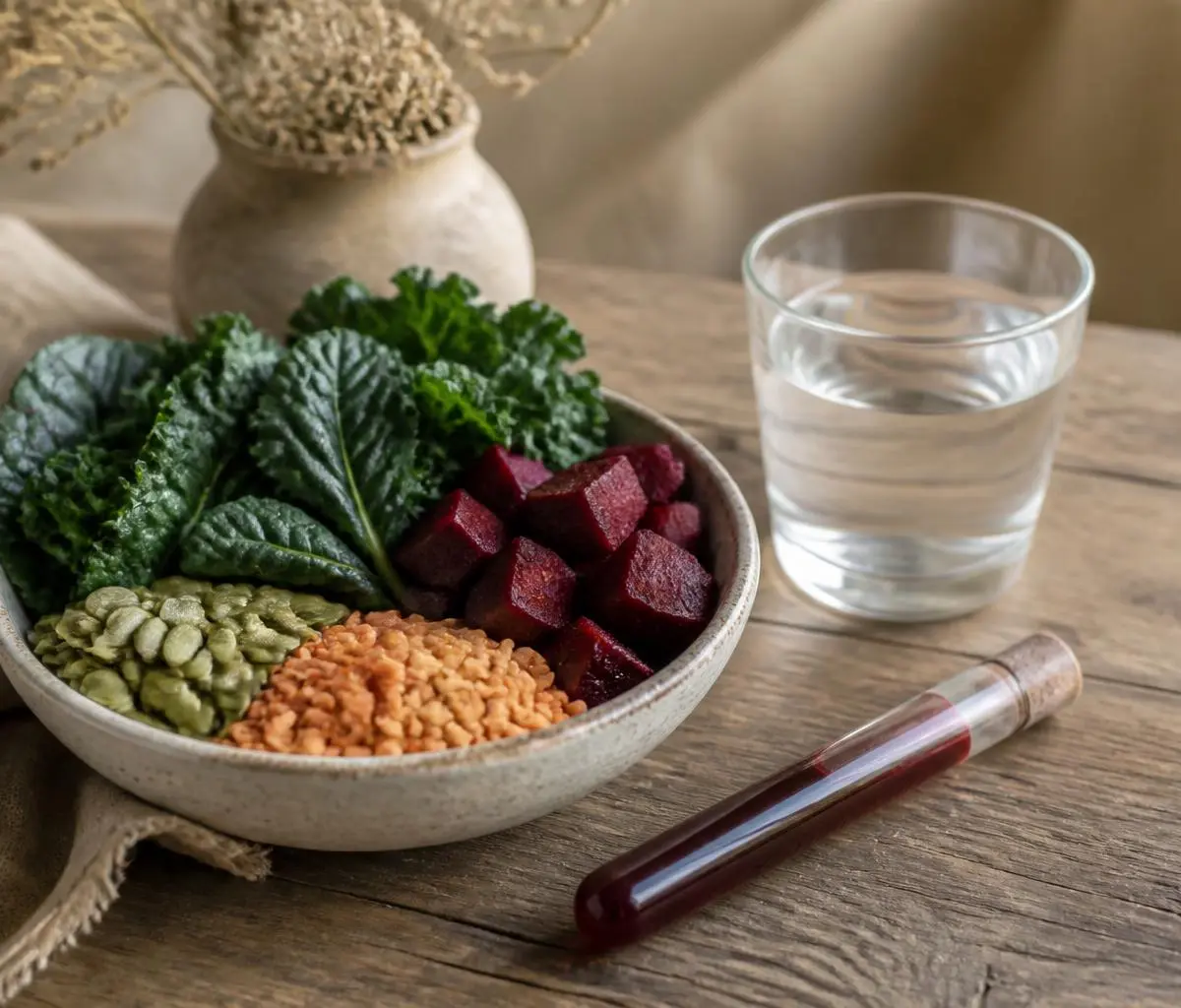
When Low Iron Becomes a Mystery
If you've been told your iron is low, you're not alone. It's one of the most common lab findings in pre-menopausal women — especially those dealing with chronic fatigue, hair loss, shortness of breath, or that "tired but wired" feeling that no amount of sleep fixes.
And if you're like many women in this community, you've probably already tried the obvious things: iron supplements, maybe even iron infusions. Maybe your ferritin creeps up for a few weeks, then crashes again. Or maybe your numbers look fine on paper, but you still feel like you're drowning.
That's because low iron is often a downstream signal. It can point to a much deeper story your body is trying to tell you.
The Iron Infusion Pattern
Here's something I've observed over and over in practice: when a woman has received iron infusion after iron infusion and her iron still won't hold, that is a dead giveaway. It means the body isn't actually deficient in iron — it's losing it, or it's being blocked from using it, or something else is consuming it.
Iron infusions are a heroic measure, and they can be life-saving in true emergencies. But when they become a recurring necessity, something in the terrain is driving the loss. And if you keep pouring iron into a body that's hemorrhaging it, hiding it, or being robbed of it, you're treating the smoke while the fire burns.
So what is the fire?
What Parasites Have to Do with Your Iron
This is where things get uncomfortable, but it's essential to understand: parasites are one of the most overlooked root causes of chronic low iron.
Parasites feed on iron. They require it for their own survival and reproduction. When you have a parasitic infection, especially in the gut, those organisms are literally consuming the iron you're taking in — from food, from supplements, and yes, even from infusions.
Some parasites, like hookworm, actually attach to the intestinal wall and feed on blood, causing direct iron loss. Others, like Giardia or Blastocystis, create inflammation and malabsorption, so even if you're eating iron-rich foods or taking high-dose supplements, your body can't assimilate them.
And then there's the biofilm piece.
Biofilms: The Hidden Iron Vault
Biofilms are protective communities that bacteria, fungi, and parasites build to shield themselves from your immune system and from antimicrobials. These slimy, sticky matrices are made of proteins, polysaccharides, and — here's the kicker — they bind iron.
Biofilms literally hoard iron. They sequester it and keep it away from your own cells. So you might have plenty of iron in your body, but it's locked up in biofilm communities in your gut, your sinuses, or other tissue. Not available to your red blood cells. Not available to your mitochondria. Not available to you.
This is one reason why simply "taking more iron" can backfire. You're not just failing to absorb it — you might be feeding the very organisms that are making you sick.
The Drainage Pathways Piece
Before you can effectively address parasites, biofilms, or gut dysbiosis, your drainage pathways must be open. These are your body's exit routes: liver, gallbladder, colon, kidneys, lymph, and skin.
If your drainage pathways are blocked, you can't eliminate parasites, their waste products, or the byproducts of biofilm disruption. When you go after them without open drainage, you create a "die-off" situation that your body can't clear. That often makes symptoms worse.
This is why drainage is always, always first in my clinical approach. Drainage is the foundation that determines whether every other intervention works or fails.
The Blood Loss You Might Not Know About
Beyond parasites, consider whether there's hidden blood loss. Heavy menstrual cycles are an obvious one, but many women don't realize their flow has become pathologically heavy because it crept up gradually. Gastrointestinal bleeding from ulcers, gastritis, or even small intestinal bacterial overgrowth (SIBO) can also cause chronic iron loss.
I always ask: "Where is the iron going?" If it's leaving faster than you can replace it, no amount of supplementation will catch up.
So What Do You Actually Do?
If you've been stuck in the low-iron loop, here's where I recommend starting:
- Open drainage first. Support liver, kidneys, colon, and lymph before any parasite or antimicrobial protocol. This is non-negotiable.
- Test, don't guess. Comprehensive stool testing can reveal parasites, dysbiosis, and biofilm markers. Organic acids testing can show metabolic patterns of microbial overgrowth.
- Consider the terrain. What's the environment in your gut that allows these organisms to thrive? Low stomach acid? Poor bile flow? Chronic stress and sympathetic dominance? All of these must be addressed.
- Nourish without feeding the pathogens. Iron-rich foods in whole-food form, paired with vitamin C, are generally safer than high-dose synthetic iron supplements when parasites are present. But this should be guided by your practitioner.
- Address the root cause. If the root is parasites, an antimicrobial protocol with open drainage is the path. If it's blood loss, find the source. If it's malabsorption, heal the gut lining.
The Faith Piece
I won't leave this conversation without naming the part that matters most to me: your body is not broken. It is speaking. Low iron is a signal, and signals can be answered.
If you've been striving to fix this — supplement after supplement, infusion after infusion, protocol after protocol — I want to gently invite you into a different posture. One of stewardship rather than striving. One of listening rather than forcing.
Healing happens as you partner with the One who designed your body, ask good questions, and address the root causes with patience and wisdom.
You are a person the Lord knows by name, and He is not finished with your story.
If you're ready to stop chasing symptoms and start uncovering root causes, you can explore working with me through the Faith-Filled Healing Foundations program as an excellent starting place or apply for a discovery call to discuss deeper 1:1 support.
Topics in this teaching

Written by
Sarah Phillipe, BSN, FDN-P, HHP
Retired RN, Functional Diagnostic Nutrition Practitioner, and Board-Certified Holistic Health Practitioner helping Christian women heal from chronic illness through faith-centered, root-cause care.